
Trauma & Biohazard
Blood & Bodily Fluid Cleanup Austin TX
OSHA-certified bloodborne pathogen remediation for accidents, injuries, and trauma events.
Bloodborne pathogens can survive on surfaces for days, and visible cleanup isn't enough — fluids penetrate carpet, subfloor, and concrete requiring professional extraction and EPA-registered disinfection. We respond 24/7 with OSHA-certified technicians and full documentation for insurance or OSHA compliance.
All services performed with complete discretion. Unmarked vehicles available upon request. We work directly with your insurance company and can assist with NDAs.
Overview
Blood and bodily fluids are classified as Category A biohazards under OSHA's Bloodborne Pathogens Standard (29 CFR 1910.1030). They can carry HIV, Hepatitis B, Hepatitis C, MRSA, C. difficile, and dozens of other infectious agents — many of which survive on dry surfaces for days or longer. Hepatitis B, for example, can remain infectious on a surface for up to 7 days. Whether the contamination resulted from an accident, injury, medical emergency, violent assault, or other trauma event, cleanup requires certified professional remediation using EPA-registered disinfectants, appropriate PPE, and regulated waste disposal. Attempting to clean blood yourself — even with bleach — is both ineffective and dangerous. Household bleach does not penetrate porous materials, loses efficacy within minutes of application, and does nothing to protect the person cleaning from direct pathogen exposure through skin contact or aerosol inhalation. AAA Disaster Recovery provides rapid, OSHA-compliant blood and bodily fluid cleanup across Austin and Central Texas — 24/7 — with the discretion and professionalism that every situation deserves.
Our Process
How We Restore Safety
Scene Assessment & Contamination Mapping
Certified technicians assess the full extent of contamination — including primary pooling, splatter patterns, secondary transfer through foot traffic, and any penetration into porous materials. No cleanup begins until the full scope is mapped.
Containment
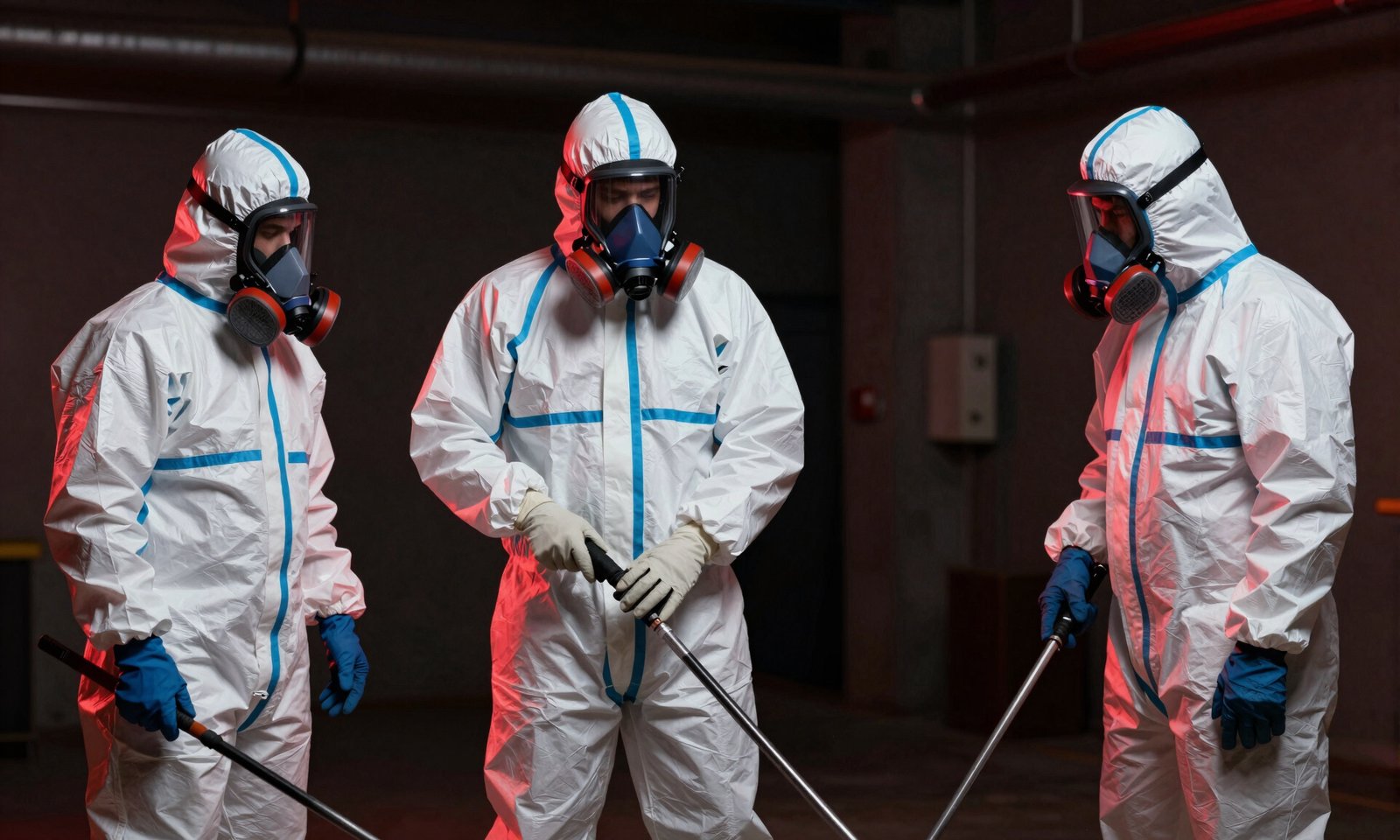
Affected areas are isolated with physical barriers to prevent cross-contamination. All access is restricted to certified technicians in full PPE — gloves, Tyvek suits, eye protection, and respirators appropriate to the contamination category.
Biological Material Removal
All visible blood, fluid, and biological material is removed using certified collection methods. All collected material is placed in sealed biohazard containers, manifested as regulated biological waste, and transported to a licensed disposal facility.
Pre-Cleaning of Surfaces
All contaminated surfaces undergo physical cleaning to remove organic matter that would interfere with disinfectant efficacy. Disinfectants work at full effectiveness only on physically clean surfaces — this step is critical and often skipped in inadequate cleanup attempts.
EPA-Registered Disinfection
Hospital-grade EPA-registered disinfectants proven effective against HIV, Hepatitis B/C, MRSA, C. difficile, and other bloodborne pathogens are applied to all affected surfaces at manufacturer-specified concentrations and dwell times. No shortcuts on contact time.
Porous Material Assessment & Removal
Carpeting, drywall, flooring, padding, and other porous materials with biological saturation are assessed individually. Materials that have absorbed fluids beyond the decontaminable surface layer are removed and disposed of as regulated biohazard waste — preventing ongoing pathogen risk and odor.
Deodorization
When biological odors are present, ozone or hydroxyl treatment is applied to neutralize odor-causing compounds at the molecular level. This step eliminates odors permanently rather than masking them.
Verification & Remediation Documentation
A post-cleanup inspection verifies complete visual decontamination. A detailed remediation report is provided documenting contamination type, surfaces treated, products used, materials removed, and compliance with OSHA 29 CFR 1910.1030 standards.
What's Included
Full Scope of Service
- OSHA 29 CFR 1910.1030 compliant bloodborne pathogen remediation
- Blood and bodily fluid removal and certified disposal
- Full contamination mapping before cleanup begins
- Hospital-grade EPA-registered disinfection
- HIV, Hepatitis B/C, MRSA, and C. diff elimination
- Manufacturer-required dwell times strictly observed
- Porous material assessment, removal, and replacement
- Certified biohazard waste transport and manifesting
- Molecular deodorization when odor is present
- Full OSHA-compliant remediation documentation report
- Discreet response — unmarked vehicles available
- 24/7 availability across Austin and Central Texas
Common Questions
FAQs
Can I clean up blood myself with bleach?
Household bleach at standard dilution is not sufficient for OSHA-compliant bloodborne pathogen remediation for several reasons: it loses efficacy within 20–30 minutes of mixing, it does not penetrate porous materials where pathogens hide, and it does not protect you from exposure during application. More critically, attempting cleanup without certified PPE puts you at direct risk of bloodborne pathogen exposure through skin contact and aerosol inhalation.
What pathogens can survive in blood on surfaces?
Hepatitis B can survive on dry surfaces for up to 7 days. HIV can survive for hours. Hepatitis C can survive for several days. MRSA can survive for weeks. C. difficile spores can persist for months. These are not theoretical risks — they are the reason OSHA created the Bloodborne Pathogens Standard and why certified remediation is the only responsible approach.
How quickly do you respond?
We respond 24/7. For active contamination scenes in the Austin metro area, we target a 60-minute response time. Rapid response matters not just for health and safety, but because blood that is allowed to dry and set into surfaces is significantly more difficult and expensive to remediate.
Is blood cleanup covered by insurance?
Yes, in most cases. Biohazard remediation resulting from accidents, injuries, and trauma events is typically covered under homeowners or commercial property policies. We handle all insurance documentation and can bill carriers directly in many cases.
What if blood has soaked through carpet into the subfloor?
This is one of the most common situations we encounter and one of the most important reasons to call professionals quickly. Blood that has penetrated carpet backing, padding, and into the subfloor cannot be decontaminated from the surface — the carpet, pad, and often a portion of the subfloor must be removed and replaced. Our technicians assess penetration depth during the initial scene assessment.
Do you service businesses and workplaces?
Yes. Workplace accidents, injuries, and medical emergencies require the same certified cleanup as residential events — and often carry additional OSHA and employer liability considerations. We serve offices, retail spaces, restaurants, warehouses, and all commercial facility types. We can work after hours to minimize operational disruption.
What does OSHA require for bloodborne pathogen cleanup in a workplace?
OSHA 29 CFR 1910.1030 requires that employers ensure all blood and OPIM (Other Potentially Infectious Materials) exposure incidents are handled by employees trained in bloodborne pathogen protocols, using appropriate PPE and EPA-registered disinfectants. In practice, this means contracting certified professionals for any meaningful contamination event. We provide full OSHA-compliant documentation for employer recordkeeping.
Don't Risk Exposure. Call Certified Professionals.
24/7 blood and bodily fluid cleanup across Austin, Round Rock, Cedar Park, Georgetown, and all of Central Texas.