
Homeowner Guide
What to Do After a Sink Overflow
September 1, 2026
Here's what to do in the first hours after a sink overflow — from a restoration crew that sees where the water really goes.
Stop the water first
Turn the faucet off, and if the sink is still backed up, don't run any more water into it. If water keeps coming from the plumbing itself, close the shutoff valves under the sink.
Get standing water up fast
Towels, a mop, a wet/dry vacuum — whatever is closest. The longer water stands, the deeper it soaks into cabinet bases and under the flooring, and that hidden water does the real damage.
Empty the sink cabinet and open everything up
Pull everything out from under the sink and leave the doors open. Cabinet boxes soak up water through their bottom edges, so drying air needs to reach inside.
Get moisture readings the same day — don't wait and see
Floors and cabinets can feel dry on the surface while the inside is still wet, and by the time swelling shows, the damage is done. A restoration pro with a moisture meter can tell in minutes what's wet, how wet, and what's savable.
Stabilize before the 48-hour mark
Water that sits in materials for more than 48 hours can lead to mold growth. Getting dehumidification running — and antimicrobial applied where it's needed — inside that window is what keeps a wet kitchen from becoming a mold job.
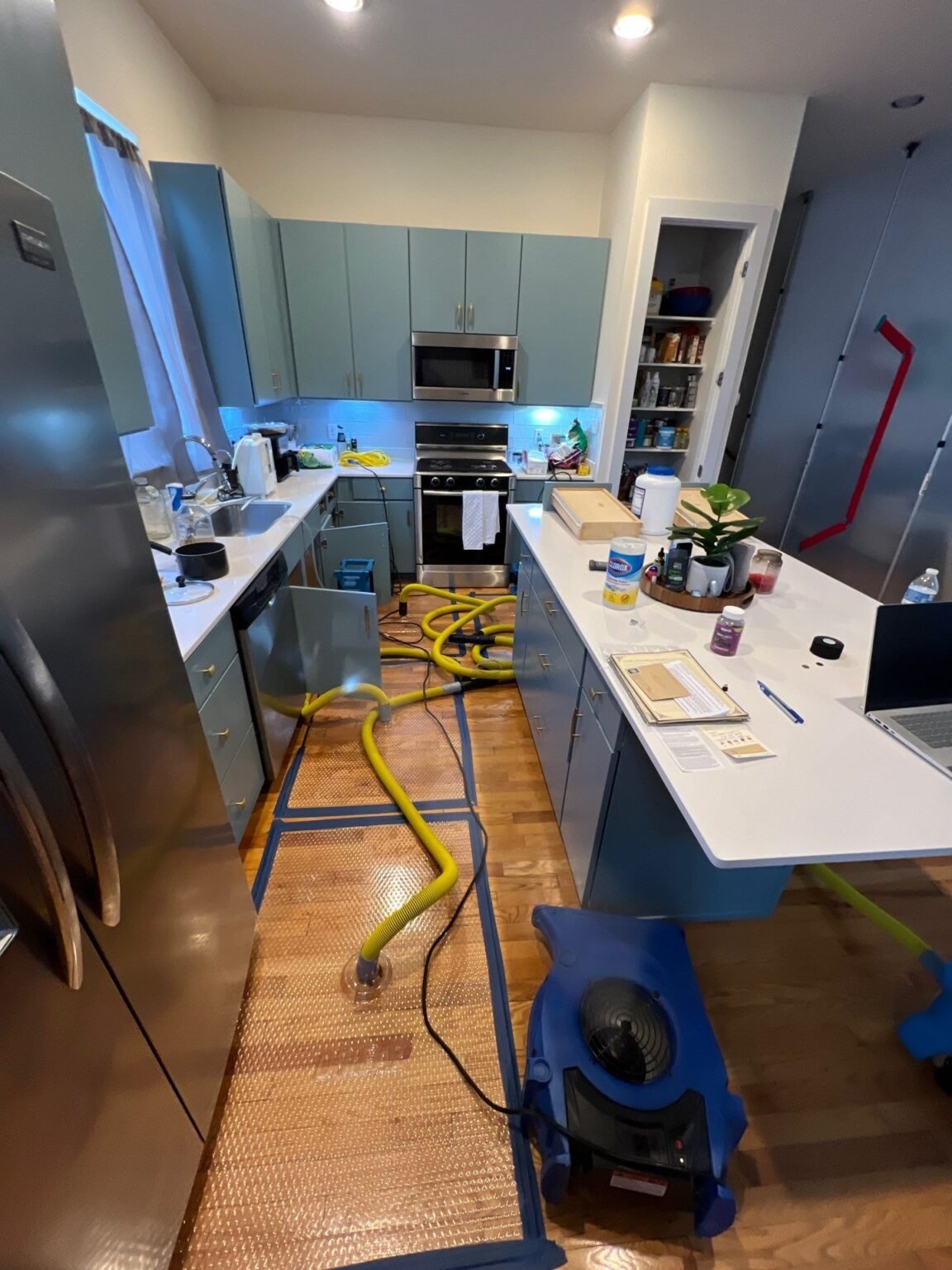
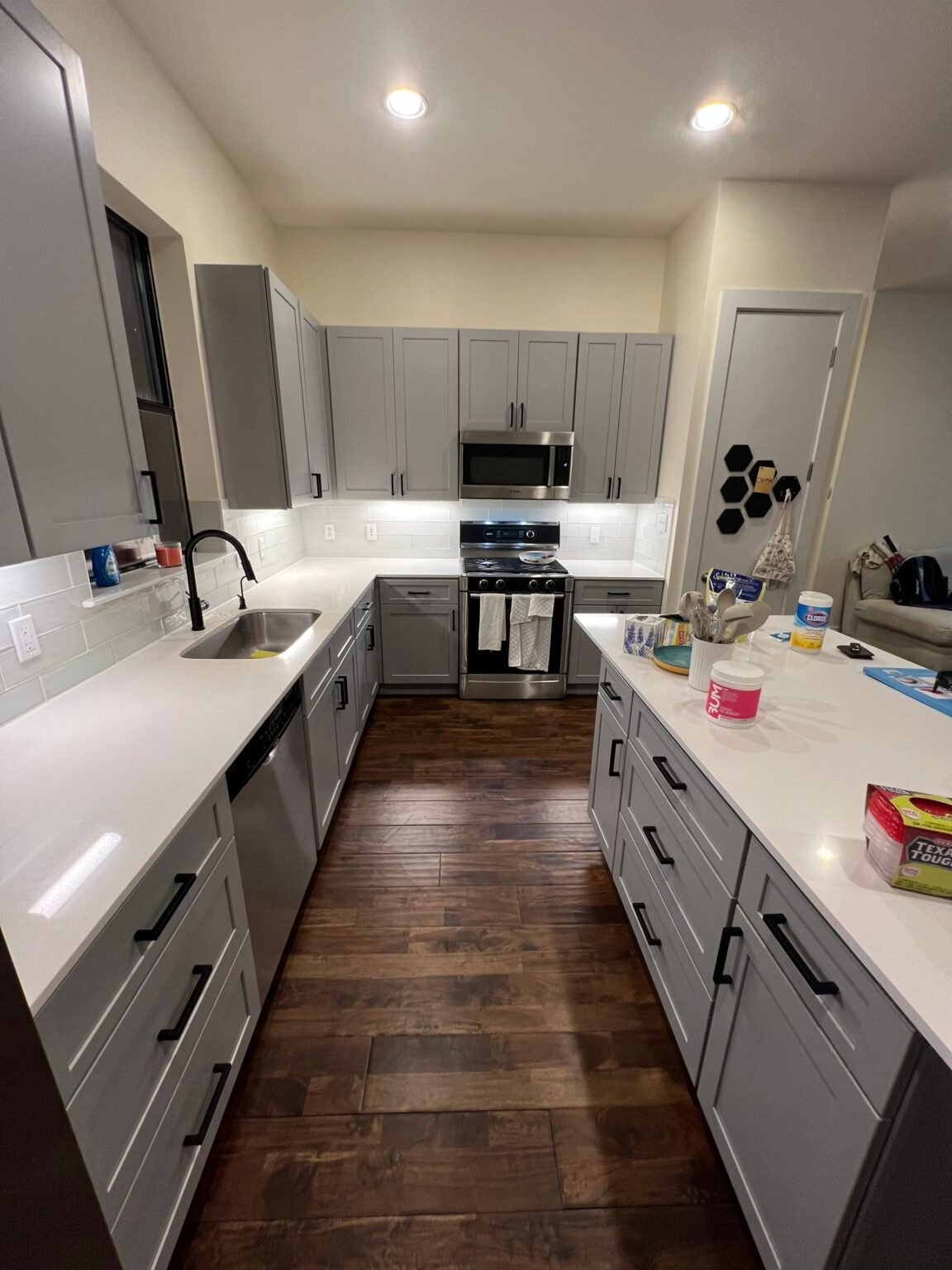
We handled exactly this in an Austin kitchen: a clogged sink overflowed with the faucet left running, and the flooring and cabinet bases swelled past saving. We dried the kitchen to standard and rebuilt with new cabinets and new flooring.
Need restoration help now?
We answer 24/7 — a real person, not an automated system.